A system-led approach to reimagining Ujjain as a city where
spiritual devotion and cultural life coexist.

A system-led approach to reimagining Ujjain as a city where
spiritual devotion and cultural life coexist.

A system-led approach to reimagining Ujjain as a city where
spiritual devotion and cultural life coexist.

The Gap

The Gap

The Gap

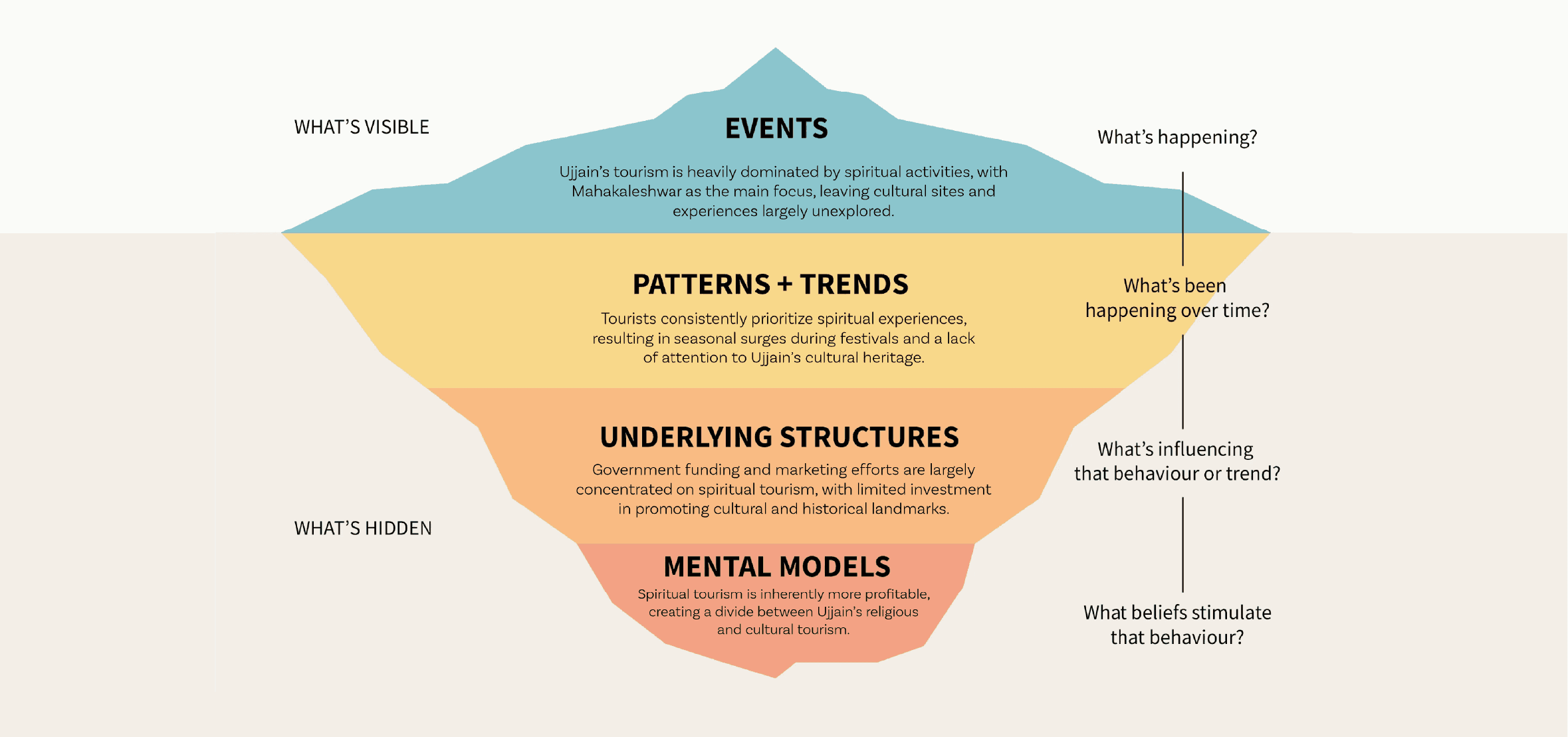
Ujjain is one of India’s most spiritually significant cities, drawing millions of pilgrims each year.

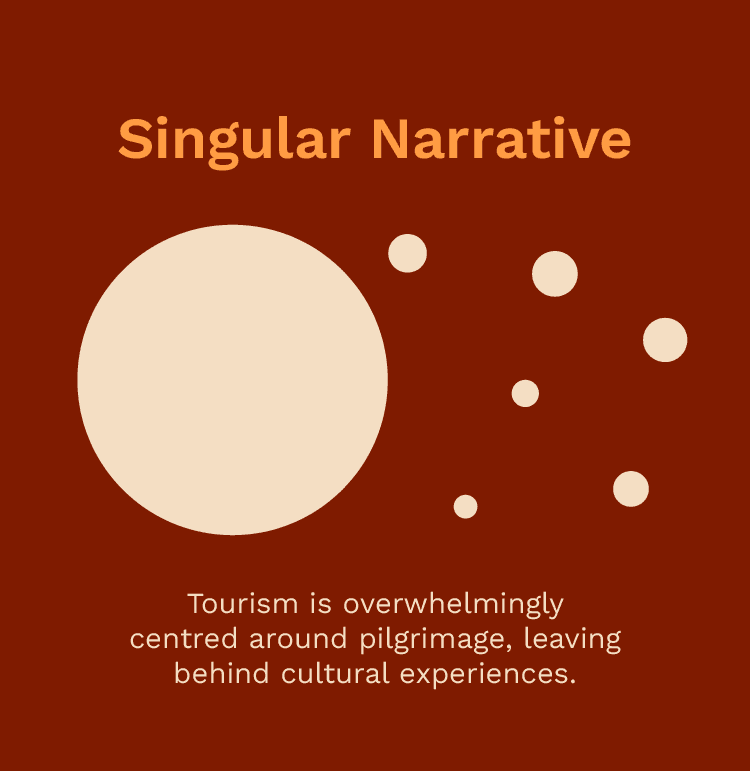
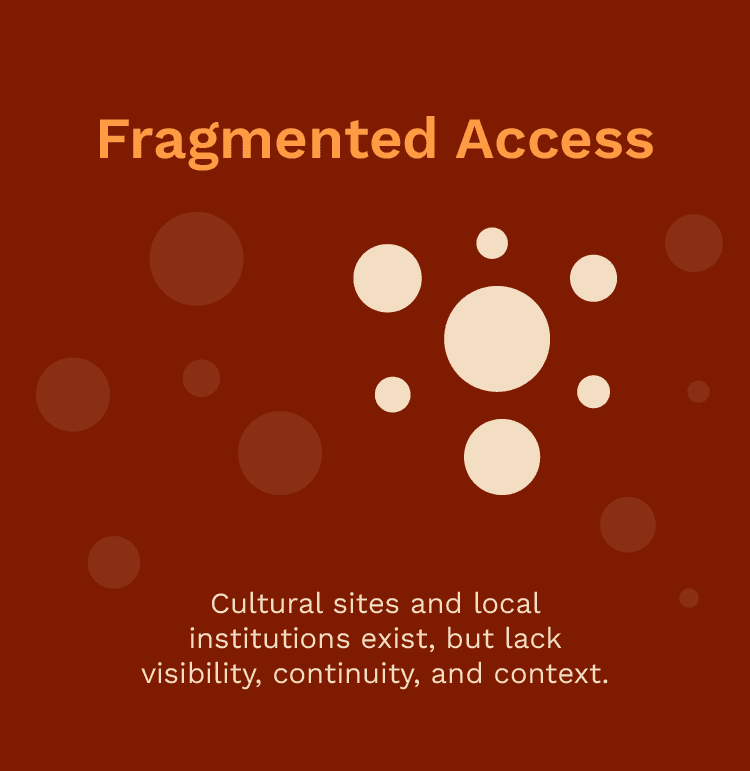
While its religious identity is deeply ingrained and well-supported, the stories and spaces around its cultural heritage often remain fragmented or overlooked within the tourism experience.

It currently lacks a system that helps people see the depth of the city.

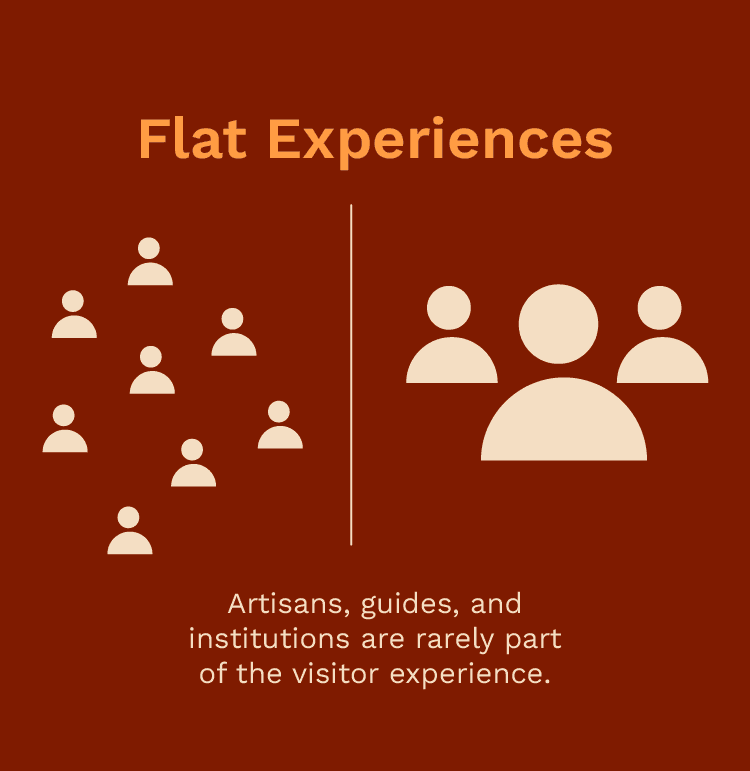
Ujjain is one of India’s most spiritually significant cities, drawing millions of pilgrims each year. While its religious identity is deeply ingrained and well-supported, the stories and spaces around its cultural heritage often remain fragmented or overlooked within the tourism experience. It currently lacks a system that helps people see the depth of the city.

Ujjain is one of India’s most spiritually significant cities, drawing millions of pilgrims each year. While its religious identity is deeply ingrained and well-supported, the stories and spaces around its cultural heritage often remain fragmented or overlooked within the tourism experience.

It currently lacks a system that helps people see the depth of the city.

Instead of treating spirituality and culture as separate experiences, the project approached them as interdependent layers of the same city. This led to a single guiding idea: A framework where spiritual intent and cultural exploration support, rather than compete with, each other.

Instead of treating spirituality and culture as separate experiences, the project approached them as interdependent layers of the same city. This led to a single guiding idea: A framework where spiritual intent and cultural exploration support, rather than compete with, each other.

Instead of treating spirituality and culture as separate experiences, the project approached them as interdependent layers of the same city. This led to a single guiding idea: A framework where spiritual intent and cultural exploration support, rather than compete with, each other.

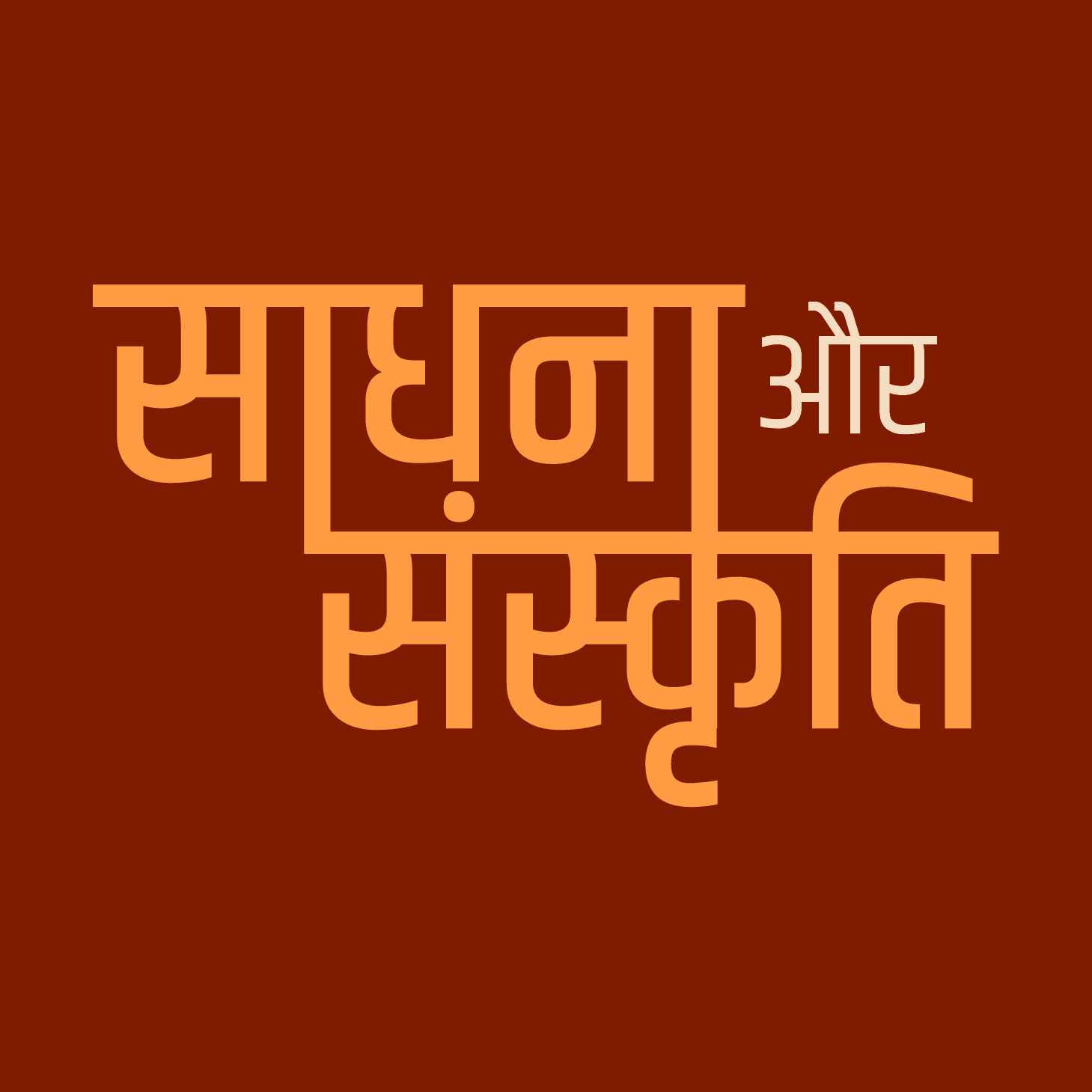
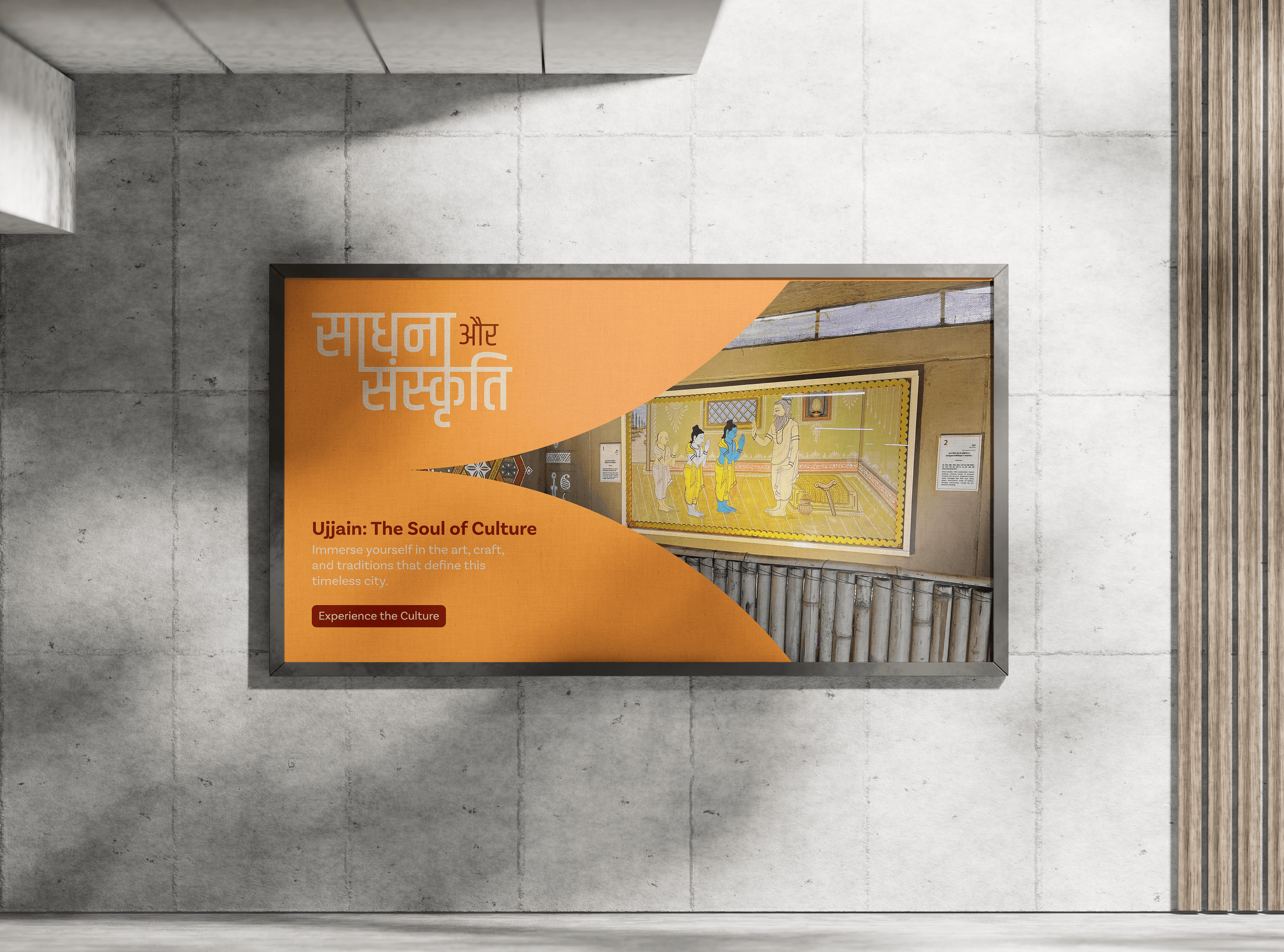
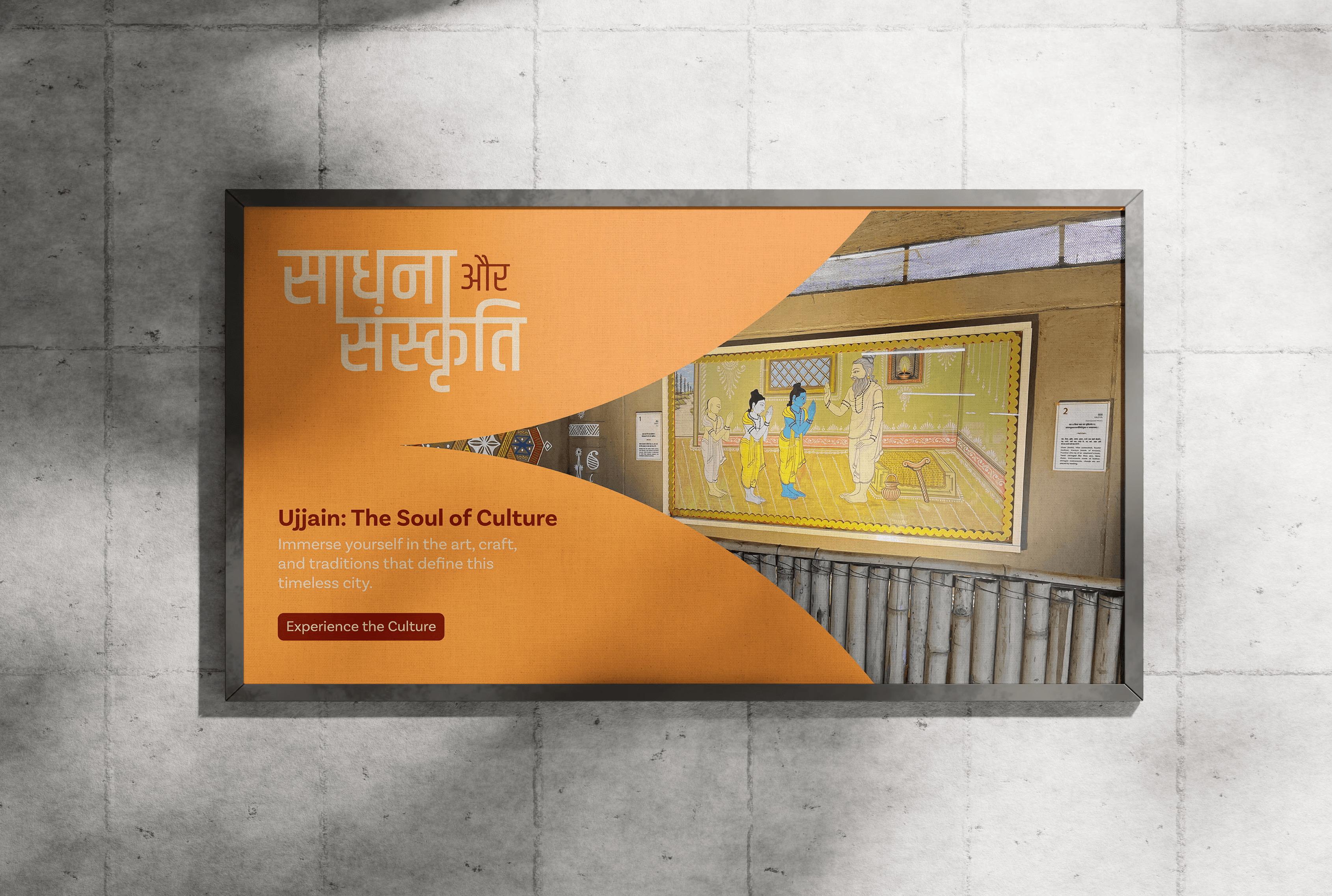
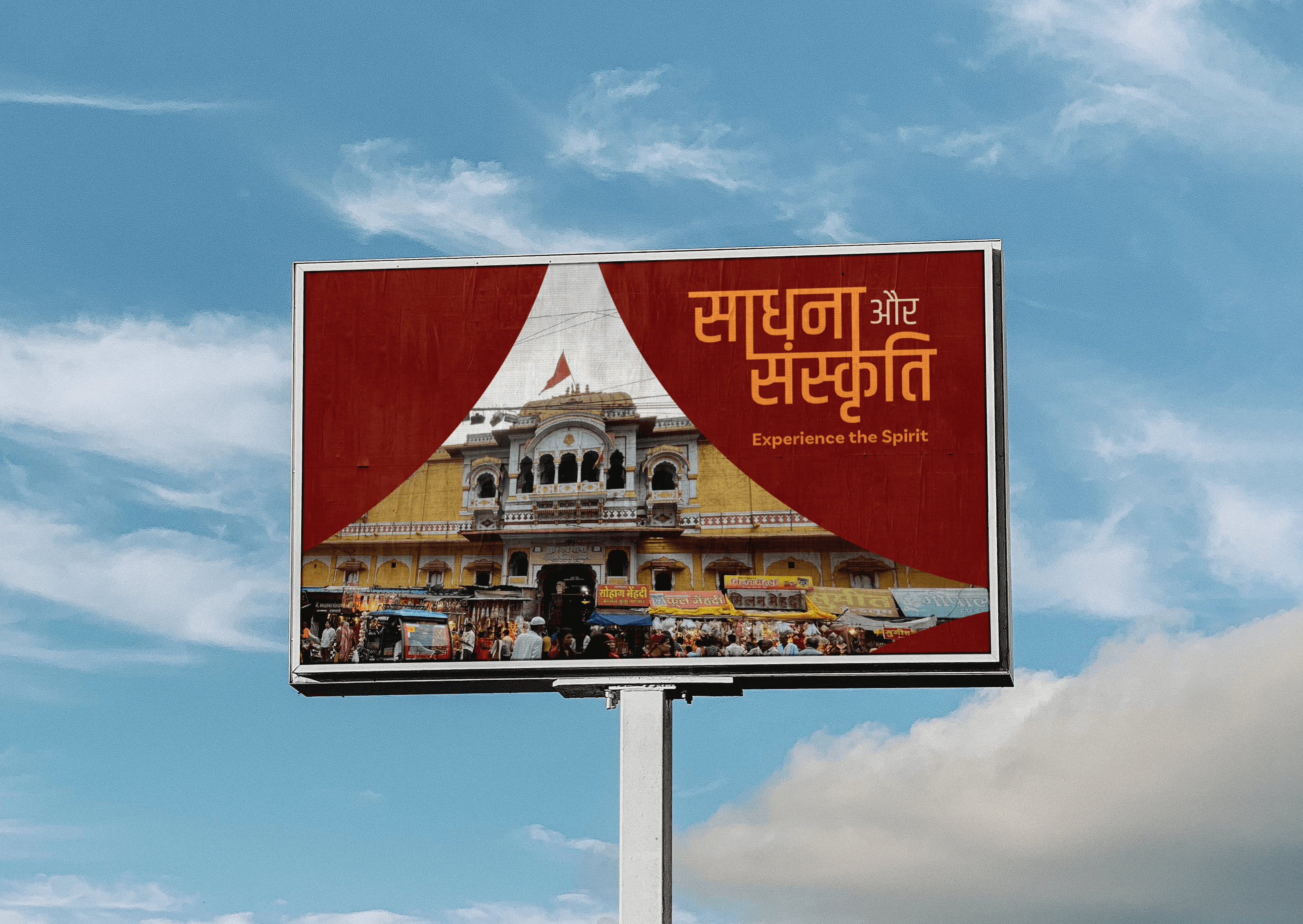
The identity system was designed to feel grounded, respectful, and rooted in the city’s spiritual rhythm while remaining open to its cultural diversity. Rather than a single symbol, the identity functions as a system that adapts across narratives, scales, and contexts without losing coherence.

The identity system was designed to feel grounded, respectful, and rooted in the city’s spiritual rhythm while remaining open to its cultural diversity. Rather than a single symbol, the identity functions as a system that adapts across narratives, scales, and contexts without losing coherence.

The identity system was designed to feel grounded, respectful, and rooted in the city’s spiritual rhythm while remaining open to its cultural diversity. Rather than a single symbol, the identity functions as a system that adapts across narratives, scales, and contexts without losing coherence.

Saadhna aur Sanskruti proposes a way of thinking about tourism as a living system — one that balances reverence with curiosity, and structure with openness. While conceptual, the framework is designed to scale and adapt, offering a foundation for culturally rich cities navigating similar tensions between heritage, tourism, and everyday life.

Saadhna aur Sanskruti proposes a way of thinking about tourism as a living system — one that balances reverence with curiosity, and structure with openness. While conceptual, the framework is designed to scale and adapt, offering a foundation for culturally rich cities navigating similar tensions between heritage, tourism, and everyday life.

Saadhna aur Sanskruti proposes a way of thinking about tourism as a living system — one that balances reverence with curiosity, and structure with openness. While conceptual, the framework is designed to scale and adapt, offering a foundation for culturally rich cities navigating similar tensions between heritage, tourism, and everyday life.